Buy tstn.eu ?
We are moving the project
tstn.eu .
Are you interested in purchasing the domain
tstn.eu ?
domain@kv-gmbh.de · 0541-91531010
Buy tstn.eu ?
How do I calculate percentages of percentages?
To calculate percentages of percentages, you first convert the percentages into decimals by dividing by 100. Then, multiply the two percentages together to get the final percentage. For example, if you want to find 20% of 50%, you would first convert 20% to 0.20 and 50% to 0.50. Then, multiply 0.20 by 0.50 to get 0.10, which is 10% of the original value. **
Why are percentages reversible?
Percentages are reversible because they represent a proportional relationship between two quantities. For example, if 20% of a quantity is 40, then 40 is 20% of the quantity. This reversibility is a fundamental property of percentages and allows for easy conversion between percentages and their corresponding values. It also makes it possible to calculate the original quantity when given the percentage and the resulting value. **


Similar search terms for Percentages
Top-Angebote
Products related to Percentages:
-
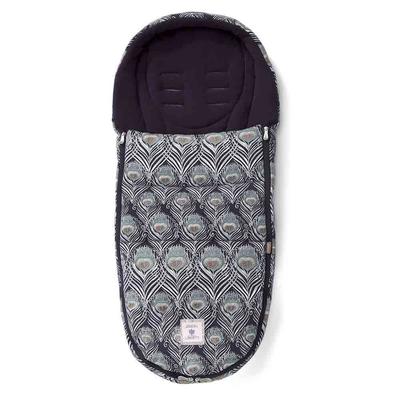
Mamas & Papas Special Edition Liberty Collaboration Cold Weather Plus FootmuffThe Cold Weather Plus Footmuff by Mamas & Papas is the ultimate footmuff for cold weather protection, and features an extra-soft fleece lining. Ideal for keeping baby warm and cozy when out and about in cool weather, you can even zip down to a liner...150,00 $*Shipping: 0,00 $Secure redirect to the provider
-
Yealink MeetingBoard 65-inch 4K Interactive Collaboration Display (MB65-A001)Yealink MeetingBoard 65 (MB65-A001): a 65-inch 4K Ultra HD LED-backlit interactive touch display for meeting rooms, with built-in camera, microphone array and speakers for Microsoft Teams Rooms and Zoom Rooms. Runs Android with a built-in processor and Wi-Fi.3896,99 £*Shipping: 0,00 £Secure redirect to the provider


-
How do you add percentages?
To add percentages, you first convert each percentage to a decimal by dividing by 100. Then, you add the decimals together. Finally, convert the sum back to a percentage by multiplying by 100. For example, if you want to add 20% and 30%, you would convert them to decimals (0.20 and 0.30), add them (0.20 + 0.30 = 0.50), and then convert the sum back to a percentage (0.50 x 100 = 50%). **
-
How can you convert percentages?
To convert a percentage to a decimal, you simply divide the percentage by 100. For example, to convert 25% to a decimal, you would divide 25 by 100, which equals 0.25. To convert a percentage to a fraction, you can write the percentage as a fraction with a denominator of 100 and then simplify if possible. For example, 50% can be written as 50/100, which simplifies to 1/2. **
-
How do you calculate percentages?
To calculate percentages, you first need to determine the total value or amount you are working with. Then, you divide the part you are interested in by the total value. Finally, multiply the result by 100 to get the percentage. For example, if you want to find out what percentage 25 is of 100, you would divide 25 by 100 (0.25) and then multiply by 100 to get 25%. **
-
How do I calculate percentages?
To calculate a percentage, you first need to determine the total value of the data set you are working with. Then, you divide the specific value you are interested in by the total value and multiply by 100. This will give you the percentage of the specific value in relation to the total value. For example, if you have 20 apples out of a total of 100 fruits, the percentage of apples would be (20/100) * 100 = 20%. **


Does Excel calculate percentages incorrectly?
Excel does not calculate percentages incorrectly. However, sometimes users may encounter issues with percentage calculations if the data is not formatted correctly or if there are errors in the formulas. It is important to ensure that the data is entered accurately and that the formulas are set up correctly to get accurate percentage calculations in Excel. **
How do you increase percentages?
To increase a percentage, you can multiply the original percentage by a factor greater than 1. For example, if you want to increase a percentage by 20%, you would multiply the original percentage by 1.20. This will give you the new, increased percentage. Alternatively, you can add the percentage increase to 100% to find the new total percentage. For example, if you want to increase a percentage by 20%, you would add 20% to 100% to get 120%. **
Top-Angebote
Products related to Percentages:
-
Sesderma Reti Age 5 Liposomal Serum Anti-Aging Innovation 30mLA facial serum for wrinkles and signs of ageing. Reduces wrinkles and fine lines. Hydrates and strengthens barrier. Restores youthful radiance. 5-Retinoid System: smooths wrinkles, accelerates renewal, and boosts collagen. Biomimetic Peptides: fill expression lines by stimulating collagen synthesis.54,51 £*Shipping: 5,34 £Secure redirect to the provider
-
Uplift Essentials Armband Heart Rate Monitor With Bluetooth 5.0 And ANT+ Connectivity Armband Heart Rate Monitor With Bluetooth 5.0 And ANT+ ConnectivityTrain smarter and safer with this armband heart rate monitor featuring accurate optical HR tracking, calorie burn monitoring, and heart rate zone feedback. Designed for fitness enthusiasts, cyclists, and athletes, this device connects seamlessly to...126,97 $*Shipping: 0,00 $Secure redirect to the provider
-
How do I calculate percentages of percentages?
To calculate percentages of percentages, you first convert the percentages into decimals by dividing by 100. Then, multiply the two percentages together to get the final percentage. For example, if you want to find 20% of 50%, you would first convert 20% to 0.20 and 50% to 0.50. Then, multiply 0.20 by 0.50 to get 0.10, which is 10% of the original value. **
-
Why are percentages reversible?
Percentages are reversible because they represent a proportional relationship between two quantities. For example, if 20% of a quantity is 40, then 40 is 20% of the quantity. This reversibility is a fundamental property of percentages and allows for easy conversion between percentages and their corresponding values. It also makes it possible to calculate the original quantity when given the percentage and the resulting value. **
-
How do you add percentages?
To add percentages, you first convert each percentage to a decimal by dividing by 100. Then, you add the decimals together. Finally, convert the sum back to a percentage by multiplying by 100. For example, if you want to add 20% and 30%, you would convert them to decimals (0.20 and 0.30), add them (0.20 + 0.30 = 0.50), and then convert the sum back to a percentage (0.50 x 100 = 50%). **
-
How can you convert percentages?
To convert a percentage to a decimal, you simply divide the percentage by 100. For example, to convert 25% to a decimal, you would divide 25 by 100, which equals 0.25. To convert a percentage to a fraction, you can write the percentage as a fraction with a denominator of 100 and then simplify if possible. For example, 50% can be written as 50/100, which simplifies to 1/2. **
Similar search terms for Percentages
-
Mamas & Papas Special Edition Liberty Collaboration Cold Weather Plus FootmuffThe Cold Weather Plus Footmuff by Mamas & Papas is the ultimate footmuff for cold weather protection, and features an extra-soft fleece lining. Ideal for keeping baby warm and cozy when out and about in cool weather, you can even zip down to a liner...150,00 $*Shipping: 0,00 $Secure redirect to the provider
-
Yealink MeetingBoard 65-inch 4K Interactive Collaboration Display (MB65-A001)Yealink MeetingBoard 65 (MB65-A001): a 65-inch 4K Ultra HD LED-backlit interactive touch display for meeting rooms, with built-in camera, microphone array and speakers for Microsoft Teams Rooms and Zoom Rooms. Runs Android with a built-in processor and Wi-Fi.3896,99 £*Shipping: 0,00 £Secure redirect to the provider
-
Dell Pro Silent Wired Collaboration Keyboard KB525C UK QWERTY - BlackProfessional wired collaboration keyboard featuring spill-resistant design and silent key switches. Includes 15 programmable shortcut keys, dedicated Copilot key, and volume controls for enhanced productivity. Full numeric keypad and UK QWERTY layout with comprehensive 3-year NBD Advance Exchange support.45,99 £*Shipping: 0,00 £Secure redirect to the provider
-
SAGE Publications A Little Guide for Teachers: Diversity in Schools (A Little Guide for Teachers)A Little Guide for Teachers: Diversity in Schools aims to provide starting points for teachers and leaders in creating a curriculum, either across disciplines or within subjects, that is as deep and diverse as their students. The Little Guide for Teachers series is little in size but BIG on all the support and inspiration you need to navigate your day to day life as a teacher. · Authored by experts in the field · Easy to dip in-and-out of · Interactive activities encourage you to write into the book and make it your own · Fun engaging illustrations throughout · Read in an afternoon or take as long as you like with it!12,99 £*Shipping: 2,99 £Secure redirect to the provider
-
How do you calculate percentages?
To calculate percentages, you first need to determine the total value or amount you are working with. Then, you divide the part you are interested in by the total value. Finally, multiply the result by 100 to get the percentage. For example, if you want to find out what percentage 25 is of 100, you would divide 25 by 100 (0.25) and then multiply by 100 to get 25%. **
-
How do I calculate percentages?
To calculate a percentage, you first need to determine the total value of the data set you are working with. Then, you divide the specific value you are interested in by the total value and multiply by 100. This will give you the percentage of the specific value in relation to the total value. For example, if you have 20 apples out of a total of 100 fruits, the percentage of apples would be (20/100) * 100 = 20%. **
-
Does Excel calculate percentages incorrectly?
Excel does not calculate percentages incorrectly. However, sometimes users may encounter issues with percentage calculations if the data is not formatted correctly or if there are errors in the formulas. It is important to ensure that the data is entered accurately and that the formulas are set up correctly to get accurate percentage calculations in Excel. **
-
How do you increase percentages?
To increase a percentage, you can multiply the original percentage by a factor greater than 1. For example, if you want to increase a percentage by 20%, you would multiply the original percentage by 1.20. This will give you the new, increased percentage. Alternatively, you can add the percentage increase to 100% to find the new total percentage. For example, if you want to increase a percentage by 20%, you would add 20% to 100% to get 120%. **
* All prices are inclusive of VAT and, if applicable, plus shipping costs. The offer information is based on the details provided by the respective shop and is updated through automated processes. Real-time updates do not occur, so deviations can occur in individual cases. ** Note: Parts of this content were created by AI.