Buy tstn.eu ?
We are moving the project
tstn.eu .
Are you interested in purchasing the domain
tstn.eu ?
domain@kv-gmbh.de · 0541-91531010
Buy tstn.eu ?
Are genetically modified enzymes the same as synthetic enzymes?
Genetically modified enzymes and synthetic enzymes are not the same. Genetically modified enzymes are produced by altering the genetic material of an organism, such as bacteria or yeast, to produce a specific enzyme. Synthetic enzymes, on the other hand, are created through chemical synthesis in a laboratory. While both types of enzymes can be used for various industrial and scientific applications, they are produced through different methods and have different origins. **
What are enzymes?
Enzymes are biological molecules that act as catalysts to speed up chemical reactions in living organisms. They are typically proteins that bind to specific molecules, called substrates, and help to convert them into different molecules. Enzymes are essential for various biological processes, such as digestion, metabolism, and cellular signaling. They are highly specific in their actions and can be regulated to control the rate of reactions in the body. **

Similar search terms for Enzymes
Top-Angebote
Products related to Enzymes:
-
Uplift Essentials Armband Heart Rate Monitor With Bluetooth 5.0 And ANT+ Connectivity Armband Heart Rate Monitor With Bluetooth 5.0 And ANT+ ConnectivityTrain smarter and safer with this armband heart rate monitor featuring accurate optical HR tracking, calorie burn monitoring, and heart rate zone feedback. Designed for fitness enthusiasts, cyclists, and athletes, this device connects seamlessly to...126,97 $*Shipping: 0,00 $Secure redirect to the provider
-
HARPERCOLLINS Creative Confidence by Tom & David Kelley – Unleashing Your Creative Potential & Innovation MindsetA powerful and inspiring book from the founders of IDEO, the award-winning design firm, on unleashing the creativity that lies within each and every one of us. Too often, companies and individuals assume that creativity and innovation are the domain of the ‘creative types’. But two of the foremost experts in innovation, design and creativity on the planet show us that each and every one of us is creative. In an entertaining and inspiring narrative that draws on countless stories from their work at IDEO, and with many of the world's top companies and design firms, David and Tom Kelley identify the principles and strategies that will allow us to tap into our creative potential in our work lives, and in our personal lives, allow us to think outside the box in terms of how we approach and solve problems. ‘Creative Confidence’ is a book that will help each of us be more productive and successful in our lives and in our careers.4,95 £*Shipping: 1,99 £Secure redirect to the provider




-
How are enzymes named?
Enzymes are named based on the type of reaction they catalyze and the substrate they act upon. The names of enzymes typically end in "-ase" to indicate their enzymatic function. The first part of the name often reflects the substrate or the type of reaction the enzyme is involved in. For example, the enzyme that breaks down lactose is called lactase, and the enzyme that breaks down lipids is called lipase. Additionally, enzymes are often given a systematic name based on their specific function and the biochemical pathways they are involved in. **
-
How do enzymes work?
Enzymes work by speeding up chemical reactions in the body. They do this by lowering the activation energy required for a reaction to occur, making it easier for the reaction to take place. Enzymes achieve this by binding to the substrate molecules involved in the reaction and bringing them into close proximity, allowing the reaction to occur more quickly. Enzymes are specific to the reactions they catalyze, and their activity can be influenced by factors such as temperature, pH, and the presence of inhibitors or activators. **
-
Why are enzymes biocatalysts?
Enzymes are biocatalysts because they are able to speed up chemical reactions in living organisms without being consumed in the process. They do this by lowering the activation energy required for a reaction to occur, making it easier for the reaction to take place. Enzymes are highly specific in their action, targeting specific substrates and catalyzing specific reactions, which allows for precise control of metabolic processes in the cell. This specificity and efficiency make enzymes essential for the functioning of biological systems. **
-
What are key enzymes?
Key enzymes are proteins that catalyze specific chemical reactions within the body. They play a crucial role in regulating and speeding up metabolic processes, such as breaking down food for energy or building new molecules for growth and repair. Key enzymes are often involved in important biochemical pathways and are essential for maintaining overall health and homeostasis in the body. Their activity can be regulated by various factors, such as substrate concentration, pH, and temperature, and they are often targeted by drugs and therapies to treat various diseases and disorders. **


What are enzymes in biology?
Enzymes are biological molecules that act as catalysts to speed up chemical reactions in living organisms. They are typically proteins that bind to specific molecules, called substrates, and help to convert them into different molecules. Enzymes are essential for various cellular processes, such as metabolism, digestion, and DNA replication. They are highly specific, meaning each enzyme catalyzes a particular reaction. **
How do you heat enzymes?
Enzymes can be heated by placing them in a water bath or incubator set at a specific temperature. It is important to use a gentle heating method to avoid denaturing the enzymes. The temperature at which enzymes are heated depends on the specific enzyme and its optimal working temperature. It is crucial to carefully monitor the temperature to ensure that the enzymes remain active and functional. **
Top-Angebote
Products related to Enzymes:
-
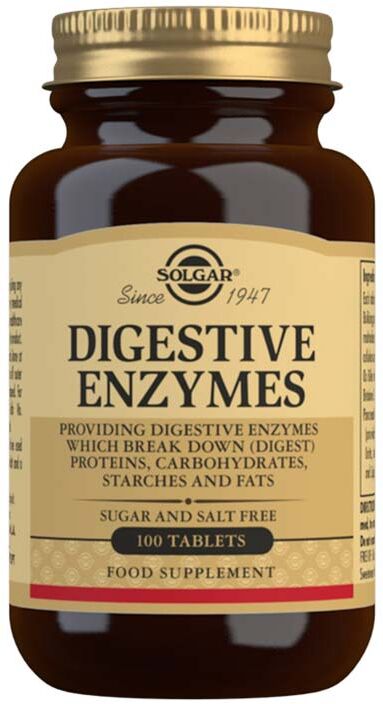
Solgar Digestive Enzymes 100 TabletsA unique proprietary complex, Solgar’s Digestive Enzymes provide support for your digestive system and for the absorption of food. Taking 1-3 of these premium, specialist supplements helps your body break down the food you eat and absorb nutrients. The digestive process is a complex one – the body breaks down the food we eat into nutrients. This is done with the help of digestive enzymes which are produced in the pancreas and small intestine. If we don’t have enough digestive enzymes, our body is not capable of breaking down food completely and nutrients won’t be absorbed efficiently, even if we follow a balanced, healthy diet. Chronic stress, low stomach acid and even food allergies can have an impact on the production of digestive enzymes – this is where Solgar comes in. Boasting ox bile, betaine, pancreatin, aspergillus oryzae, papain and pesin extract, Solgar’s supplement provides extra digestive support after meals. Each of its enzymes targets different food groups, ensuring a holistic approach to digestion. All Solgar products meet the industry-recognised “Gold Standard” for excellence. Made using naturally sourced ingredients and innovating since 1947. Key Benefits • Specialist combination of digestive enzymes to support the breakdown of proteins, carbohydrates, starches and fats • Helps your digestive system extract nutrients from your food • Designed to support your digestive system Ingredients Bulking Agents: (calcium carbonate, maltodextrin, microcrystalline cellulose, sucrose, lactose), Ox Bile Powdered Extract, Betaine HCI, Pancreatin 4X Concentrate (providing Protease, Amylase, Lipase), Powdered Peppermint (Mentha piperita) Leaf, Cross-Linked Cellulose Gum, Aspergillus oryzae, Amylase, Anti-caking Agents: (silicon dioxide, vegetable magnesium stearate), Papain, Glazing Agents: (hydroxypropylmethyl cellulose, vegetable glycerin (from palm kernel oil and coconut oil)), Pepsin Extract (contains milk).20,50 £*Shipping: 2,95 £Secure redirect to the provider
-
Upcircle Powder To Foam Face Wash With Willow Bark and Papaya EnzymesExperience a refreshing and radiant complexion with the Upcircle Powder To Foam Face Wash With Willow Bark and Papaya Enzymes. This innovative, water-activated cleanser features a non-stripping, soap-free formula designed to cleanse and gently exfoliate the skin. Each bottle provides up to 200 uses, offering a lightweight yet highly effective solution for a daily skincare routine. Skin is left feeling balanced, revitalized, and smooth after every use.The 97% natural formulation is enriched with upcycled rice lees and willow bark to refine texture and even out skin tone. Papaya enzymes provide a light polishing effect, lifting away dead skin cells and daily impurities to reveal a brighter appearance. This vegan and cruelty-free product is made in South Korea and comes in a recyclable glass bottle, making it an ideal choice for those seeking sustainable beauty options.Suitable for all skin types, including sensitive skin, this cleanser is simple to use. Dispense a small amount into wet hands and add water to create a soft, luxurious foam. Gently massage the foam into the skin and rinse thoroughly for a clean, refreshed finish.Key BenefitsCleanses and gently exfoliates without stripping the skin using a soap-free, 97% natural formula that leaves the complexion refreshed and radiant - Smooths and evens skin tone with upcycled rice lees, willow bark, and papaya enzymes that lift dead skin cells and daily impurities - Offers a sustainable and long-lasting skincare solution with up to 200 uses per recyclable glass bottle of this vegan and cruelty-free cleanserIngredients:97% Natural Ingredients: Zea Mays (Corn) Starch, Sodium Cocoyl Isethionate, Sodium Lauroyl Glutamate, Diglycerin, Oryza Sativa (Rice) Lees Extract, Salix Alba (Willow) Bark Extract, Oryza Sativa (Rice) Powder, Camellia Sinensis Leaf Powder, Centella Asiatica Leaf/Stem Powder, Chamomilla Recutita (Matricaria) Flower Extract, Allantoin, Papain, Panthenol, Maltodextrin, Glucose, Glycerin, Aqua (Water), 1,2-Hexanediol.17,59 £*Shipping: 2,95 £Secure redirect to the provider
-
Uplift Essentials Armband Heart Rate Monitor With Bluetooth 5.0 And ANT+ Connectivity Armband Heart Rate Monitor With Bluetooth 5.0 And ANT+ ConnectivityTrain smarter and safer with this armband heart rate monitor featuring accurate optical HR tracking, calorie burn monitoring, and heart rate zone feedback. Designed for fitness enthusiasts, cyclists, and athletes, this device connects seamlessly to...126,97 $*Shipping: 0,00 $Secure redirect to the provider
-
Are genetically modified enzymes the same as synthetic enzymes?
Genetically modified enzymes and synthetic enzymes are not the same. Genetically modified enzymes are produced by altering the genetic material of an organism, such as bacteria or yeast, to produce a specific enzyme. Synthetic enzymes, on the other hand, are created through chemical synthesis in a laboratory. While both types of enzymes can be used for various industrial and scientific applications, they are produced through different methods and have different origins. **
-
What are enzymes?
Enzymes are biological molecules that act as catalysts to speed up chemical reactions in living organisms. They are typically proteins that bind to specific molecules, called substrates, and help to convert them into different molecules. Enzymes are essential for various biological processes, such as digestion, metabolism, and cellular signaling. They are highly specific in their actions and can be regulated to control the rate of reactions in the body. **
-
How are enzymes named?
Enzymes are named based on the type of reaction they catalyze and the substrate they act upon. The names of enzymes typically end in "-ase" to indicate their enzymatic function. The first part of the name often reflects the substrate or the type of reaction the enzyme is involved in. For example, the enzyme that breaks down lactose is called lactase, and the enzyme that breaks down lipids is called lipase. Additionally, enzymes are often given a systematic name based on their specific function and the biochemical pathways they are involved in. **
-
How do enzymes work?
Enzymes work by speeding up chemical reactions in the body. They do this by lowering the activation energy required for a reaction to occur, making it easier for the reaction to take place. Enzymes achieve this by binding to the substrate molecules involved in the reaction and bringing them into close proximity, allowing the reaction to occur more quickly. Enzymes are specific to the reactions they catalyze, and their activity can be influenced by factors such as temperature, pH, and the presence of inhibitors or activators. **
Similar search terms for Enzymes
-
HARPERCOLLINS Creative Confidence by Tom & David Kelley – Unleashing Your Creative Potential & Innovation MindsetA powerful and inspiring book from the founders of IDEO, the award-winning design firm, on unleashing the creativity that lies within each and every one of us. Too often, companies and individuals assume that creativity and innovation are the domain of the ‘creative types’. But two of the foremost experts in innovation, design and creativity on the planet show us that each and every one of us is creative. In an entertaining and inspiring narrative that draws on countless stories from their work at IDEO, and with many of the world's top companies and design firms, David and Tom Kelley identify the principles and strategies that will allow us to tap into our creative potential in our work lives, and in our personal lives, allow us to think outside the box in terms of how we approach and solve problems. ‘Creative Confidence’ is a book that will help each of us be more productive and successful in our lives and in our careers.4,95 £*Shipping: 1,99 £Secure redirect to the provider
-
Ring Battery Video Doorbell Pro – Advanced Home Security & Connectivity, NewUpgrade your home security with the Ring Battery Video Doorbell Pro – Wireless Video Doorbell Security Camera . Designed to give you peace of mind, it delivers a head-to-toe 1536p HD view so you can see every detail clearly, from visitors to parcels at your doorstep. With advanced 3D Motion Detection and Bird’s Eye View , you’ll always know what’s happening around your home. The built-in colour night vision ensures crisp images even in the dark, while the wire-free battery design makes installation simple and flexible. Stay connected anywhere with instant notifications, two-way talk, and full integration with the Ring app, Alexa devices, and more. ✔️ Wireless video doorbell – Easy to install with a rechargeable battery, no wiring needed ✔️ 1536p HD head-to-toe view – See visitors and packages clearly in high definition ✔️ 3D Motion Detection & Bird’s Eye View – Advanced alerts and aerial perspective for extra security ✔️ Colour night vision – Crystal-clear video even in low light or darkness ✔️ Two-way talk with noise cancellation – Hear and speak to visitors in real time ✔️ Customisable motion zones – Focus on the areas that matter most ✔️ Smart alerts & notifications – Instant updates on your phone via the Ring app ✔️ Alexa compatible – Works seamlessly with Echo devices for hands-free monitoring ✔️ Quick-release battery pack – Easy to recharge and swap for uninterrupted security ✔️ Durable design – Built to withstand outdoor weather conditions The Ring Battery Video Doorbell Pro combines advanced motion detection, high-definition video, and smart home integration in one sleek device. Perfect for enhancing your home security, it ensures you never miss a visitor or delivery, day or night.174,49 £*Shipping: 0,00 £Secure redirect to the provider
-
Yealink MeetingBoard 65-inch 4K Interactive Collaboration Display (MB65-A001)Yealink MeetingBoard 65 (MB65-A001): a 65-inch 4K Ultra HD LED-backlit interactive touch display for meeting rooms, with built-in camera, microphone array and speakers for Microsoft Teams Rooms and Zoom Rooms. Runs Android with a built-in processor and Wi-Fi.3896,99 £*Shipping: 0,00 £Secure redirect to the provider
-
Why are enzymes biocatalysts?
Enzymes are biocatalysts because they are able to speed up chemical reactions in living organisms without being consumed in the process. They do this by lowering the activation energy required for a reaction to occur, making it easier for the reaction to take place. Enzymes are highly specific in their action, targeting specific substrates and catalyzing specific reactions, which allows for precise control of metabolic processes in the cell. This specificity and efficiency make enzymes essential for the functioning of biological systems. **
-
What are key enzymes?
Key enzymes are proteins that catalyze specific chemical reactions within the body. They play a crucial role in regulating and speeding up metabolic processes, such as breaking down food for energy or building new molecules for growth and repair. Key enzymes are often involved in important biochemical pathways and are essential for maintaining overall health and homeostasis in the body. Their activity can be regulated by various factors, such as substrate concentration, pH, and temperature, and they are often targeted by drugs and therapies to treat various diseases and disorders. **
-
What are enzymes in biology?
Enzymes are biological molecules that act as catalysts to speed up chemical reactions in living organisms. They are typically proteins that bind to specific molecules, called substrates, and help to convert them into different molecules. Enzymes are essential for various cellular processes, such as metabolism, digestion, and DNA replication. They are highly specific, meaning each enzyme catalyzes a particular reaction. **
-
How do you heat enzymes?
Enzymes can be heated by placing them in a water bath or incubator set at a specific temperature. It is important to use a gentle heating method to avoid denaturing the enzymes. The temperature at which enzymes are heated depends on the specific enzyme and its optimal working temperature. It is crucial to carefully monitor the temperature to ensure that the enzymes remain active and functional. **
* All prices are inclusive of VAT and, if applicable, plus shipping costs. The offer information is based on the details provided by the respective shop and is updated through automated processes. Real-time updates do not occur, so deviations can occur in individual cases. ** Note: Parts of this content were created by AI.